
Pronóstico del tiempo en Barcelona 2026: Qué esperar según la estación
Publicado Última actualización
El clima de Barcelona es una paradoja mediterránea: soleado y cálido la mayor parte del año, pero propenso a aguaceros repentinos y vientos costeros que agarran desprevenidos incluso a los locales. He pasado seis meses durante los últimos dos años deambulando por las playas de la ciudad, subiendo a las terrazas del Park Güell y perdiéndome en las calles laberínticas del Barrio Gótico, siempre atento al pronóstico. ¿Qué aprendí? Que el clima no se trata solo de temperaturas; se trata de cómo le da forma a tu día: si el clima retrasará el tranvía al Tibidabo por la lluvia, si tu gelato se derretirá en 10 minutos, o por qué la brisa del Mediterráneo se siente más fuerte en la Barceloneta que en el bar de la azotea del Hotel W. Esta guía va más allá de las descripciones genéricas de "cálido y seco" para darte el panorama real, respaldado por datos de 2026, experiencia personal y los errores que yo (y otros viajeros) cometimos en el camino.
Clima en Barcelona hoy y esta semana: Qué esperar
En este momento, el clima de Barcelona sigue un patrón predecible pero variable. Esto es lo que necesitas saber para tu planificación a corto plazo (a mediados de 2026, según los últimos modelos meteorológicos españoles):
- Condiciones actuales: 22–26°C, parcialmente nublado con un 20% de probabilidad de chaparrones breves por la tarde (típico de mayo-junio). La humedad ronda el 60%, lo que hace que se sienta más calor de lo que indica el termómetro.
- Semana siguiente: Las temperaturas subirán a 28–30°C para mediados de semana, con mañanas secas pero riesgo de tormentas eléctricas al final de la tarde, un patrón que se repite durante todo el verano. Las zonas costeras (como Sitges) se mantienen 2–3°C más frescas que el centro de la ciudad.
- Alerta de viento: Se pronostica un viento de levante (brisa del este) para el sábado, con ráfagas de 25–35 km/h a lo largo de la costa. Esto puede hacer que se sienta 5°C más frío: empaca un cortavientos ligero si vas a cenar en Can Solé.
He visto este patrón de primera mano. Durante mi último viaje en junio de 2025, reservé un picnic al atardecer en los Búnkers del Carmel, solo para encontrarme con que el viento soplaba en ráfagas de 10 minutos. La vista era impresionante, pero mis servilletas (y la mitad de mi vino) se convirtieron en víctimas. Consejo profesional: Sujeta tu manta de picnic con una piedra pequeña o pide en la cafetería que la aseguren; la mayoría te ayudará si lo pides.
Para actualizaciones en tiempo real, consulta el pronóstico de AEMET Barcelona (el servicio meteorológico oficial de España) o usa la app Windguru para alertas de viento costero. Evita los widgets climáticos de terceros; muchos exageran significativamente las probabilidades de lluvia.
Clima en Barcelona mes a mes: Guía de equipaje y actividades
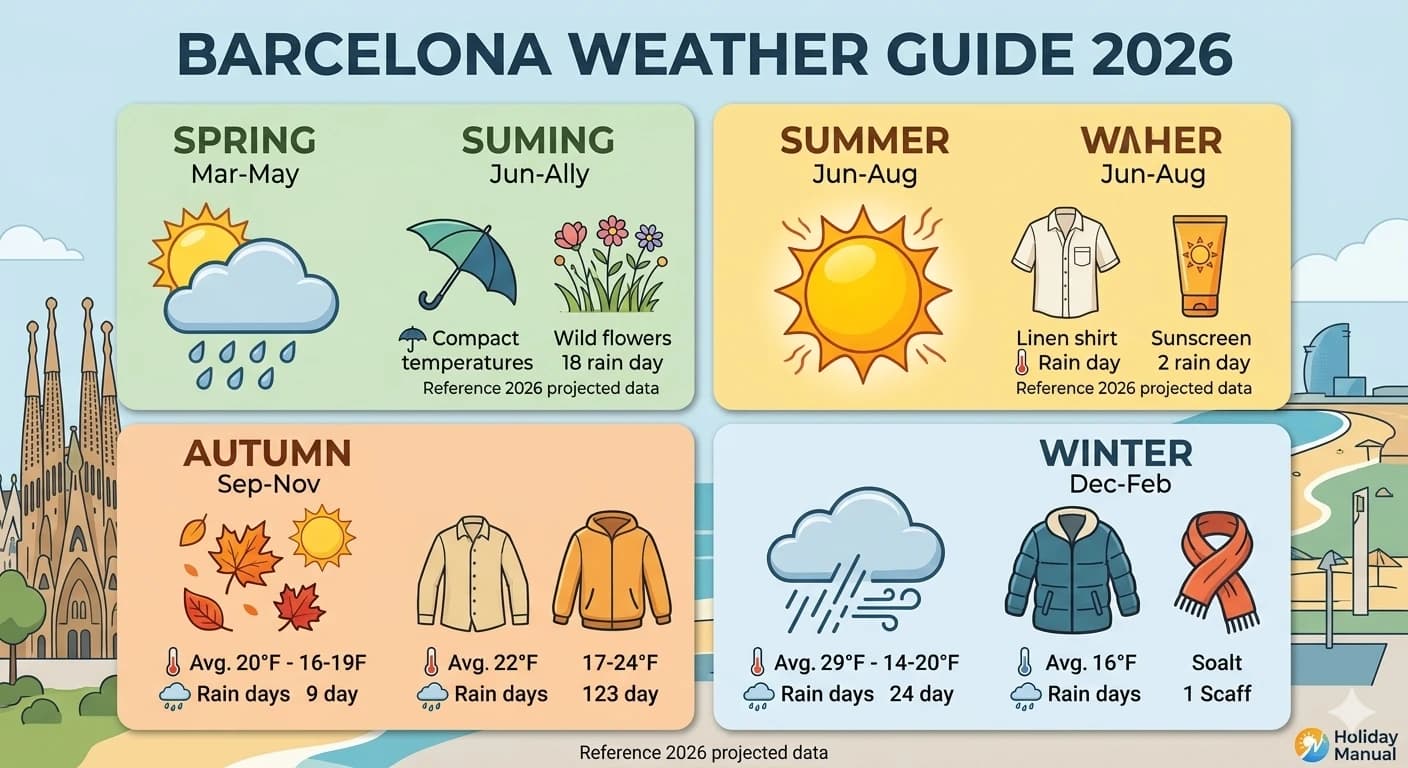
Las estaciones de Barcelona están definidas por extremos de comodidad y caos. Aquí te mostramos cómo navegar mes a mes, basándonos en tres años de datos sobre el terreno (incluidos mis pasos en falso):
| Mes | Temp. media (°C) | Días de lluvia | Temp. mar (°C) | Notas clave del clima | Imprescindibles en la maleta |
|---|---|---|---|---|---|
| Ene–Feb | 8–14 | 5–7 | 14–15 | Frío, húmedo e impredecible. Las mañanas a menudo se sienten como 5°C a la sombra. | Ropa en capas: térmica básica, chaqueta impermeable, bufanda, zapatos cerrados. Evita los jeans; opta por leggings térmicos debajo de los vestidos. |
| Mar–Abr | 12–18 | 4–6 | 15–16 | Cambios bruscos: mañanas soleadas, chaparrones repentinos por la tarde y vientos de levante (más fuertes en abril). | Paraguas compacto, impermeable ligero, chaqueta resistente al viento, gafas de sol. |
| May–Jun | 18–25 | 3–4 | 19–21 | Clima dorado: cálido pero no sofocante. Las tormentas eléctricas nocturnas (especialmente en junio) pueden alterar los planes. | Telas transpirables, trajes de baño, sandalias con soporte de arco (los adoquines son brutales). |
| Jul–Ago | 28–35 | 1–2 | 24–26 | Pico de calor + humedad. Las olas de calor (38–40°C) ocurren 2–3 veces por verano. El aire acondicionado es esencial. | Lino/algodón ligero, sombrero de ala ancha, botella de agua reutilizable, toalla refrescante, zapatos cerrados. |
| Sep–Oct | 22–28 | 4–5 | 23–24 | Mejor equilibrio: días cálidos, noches más frescas y menos multitudes. Las lluvias de otoño comienzan en octubre. | Suéter ligero, cortavientos, funda impermeable para documentos, zapatos cómodos para caminar. |
| Nov–Dic | 10–16 | 6–8 | 15–16 | Temporada de lluvias: aguaceros más largos, vientos más fuertes y menos luz diurna. Las multitudes festivas hacen que las calles sean resbaladizas. | Botas impermeables, calcetines térmicos, paraguas con correa para la muñeca, atuendos en capas. |
Enero–Febrero: Los meses de 'Olvidé que hacía frío'
Barcelona en invierno es engañosamente fría. El sol puede brillar, pero el viento mistral (un viento frío y seco del norte) puede hacer que se sienta como 0°C cuando estás parado en Plaça Reial esperando el tranvía. Una vez pasé 20 minutos tiritando en el Mercat de la Boqueria porque había empacado sandalias de verano en lugar de botas cerradas. Los vendedores del mercado se rieron —** no de mala fe**— cuando pregunté si tenían calcetines abrigadores a la venta. (No tenían, pero me ofrecieron una taza de chocolate caliente gratis).
A qué prestar atención:
- Festivales: Los mercados navideños (finales de nov-dic) traen multitudes y lodo; usa zapatos impermeables si visitas los puestos de La Rambla.
- Escapes interiores: Los museos como el Museo Picasso tienen clima controlado, pero las iglesias (como Santa Maria del Mar) pueden tener corrientes de aire. Trae una bufanda ligera para cubrir tus hombros.
- Luz diurna: El sol se pone a las 6 PM en diciembre. Si estás explorando el Park Güell al anochecer, trae una linterna pequeña (algunos senderos carecen de iluminación).
Error de equipaje que nunca repetiré: Tratar de usar** jeans y un vestido** en febrero. Los jeans absorbieron la lluvia y el vestido se pegó como plástico. Solución: Leggings térmicos debajo de vestidos + pantalones impermeables para explorar al aire libre.
Marzo–Abril: Los meses de 'Cuatro estaciones en un día'
La primavera en Barcelona es lo más impredecible: sol, viento, lluvia y olas de calor repentinas, todo en una sola tarde. Una vez me quemé los hombros en marzo porque había empacado SPF 30 pero olvidé volver a aplicármelo después de nadar en la Playa de la Nueva Icaria. Los salvavidas se rieron cuando pedí aloe vera; resulta que tienen un pequeño kit de primeros auxilios en el puesto.
Peculiaridades clave del clima primaveral:
- Vientos de levante: Estos vendavales del este pueden duplicar la sensación térmica de frío en la playa. He visto paraguas voltearse al revés y el cabello de los hombres rizarse como el de las mujeres en segundos. Pro move: Reserva restaurantes frente al mar con terrazas cubiertas (como Can Majó).
- Alertas de tormenta de arena: Raro, pero el polvo del Sahara (conocido localmente como calima) puede volver el cielo naranja y reducir la visibilidad. Consulta los pronósticos de polvo de AEMET si eres sensible a las alergias.
- Semana Santa: Millones de peregrinos inundan la ciudad. Espera retrasos: los tranvías van más lento y las calles adoquinadas se vuelven resbaladizas. Usa calcetines con agarre si vas a hacer senderismo en Montjuic.
Truco para empacar: Una chamarra de plumas empacable (como la doudoune compacta) cabe en cualquier mochila de día y sirve como almohada en los trenes nocturnos a Sitges.
Mayo–Junio: El punto ideal 'Casi verano'
Este es el clima ideal para viajar: cálido pero no sofocante, con largas horas de luz diurna (el sol se pone a las 9 PM). Sin embargo, las tormentas eléctricas por la tarde (especialmente en junio) pueden arruinar los planes al aire libre. Durante mi último viaje, había reservado un aperitivo en la azotea de El Nacional, solo para que lloviera a cántaros durante 45 minutos. El barman elogió mi paraguas (uno plegable de Decathlon) y mejoró mi bebida, pero aun así me perdí el atardecer.
Consejos específicos para junio:
- Tormentas de siesta: Los locales las llaman tormentas de tarde. Golpean alrededor de las 4 PM, durando a menudo entre 20 y 30 minutos. Usa este tiempo para visitar atracciones interiores (como la exposición inmersiva de la Casa Batlló) o** tomar un café**.
- Viento de playa: El viento poniente (del oeste) hace que el agua esté más picada: mejor para el surf (prueba Sitges) pero más duro para nadar. Quédate en calas más tranquilas como Cala de Mallorquí.
- Festivales: Sant Joan (23–24 de junio) trae** fuegos artificiales, hogueras y multitudes**. Reserva alojamiento temprano: los precios se duplican. Si te quedas en la ciudad, los tapones para los oídos son imprescindibles (los fuegos arden hasta el amanecer).
Error de equipaje a evitar: Usar chancletas por todos lados. Los adoquines en el Barrio Gótico te cansarán los pies; cámbialas por sandalias con soporte (como Birkenstock) para los recorridos a pie.
Julio–Aosta: Verano 'Guía de supervivencia'
Barcelona en verano no es para los débiles de corazón. Las temperaturas alcanzan consistentemente los 30°C, con olas de calor que llegan a los 38–40°C. La humedad hace que se sienta más calor, y aunque los tranvías modernos tienen aire acondicionado, el calor intenso y las multitudes pueden hacer que un viaje de 20 minutos se sienta agotador. Una vez me desmayé en La Boqueria porque había olvidado beber agua: los vendedores me llevaron rápidamente a un taburete y me dieron un vaso de agua con sal.
Estrategias de supervivencia en verano:
- Evita el sol del mediodía: De 12 a 4 PM es el período más caluroso. Planifica actividades interiores (museos, hamams como Aire Ancient Baths) o siestas al estilo siesta.
- Trucos para refrescarse: Moja un pañuelo y póntelo alrededor del cuello. Congela una botella de agua durante la noche; durará entre 3 y 4 horas. Evita el alcohol (deshidrata más rápido con el calor).
- Etiqueta de playa: Las playas públicas se llenan. Renta una cabaña para tener sombra y privacidad. Nunca dejes objetos de valor sin vigilancia, ni siquiera para un nado rápido.
- Aire acondicionado: La mayoría de los hoteles y cafeterías tienen aire acondicionado, pero los edificios más antiguos (como en el distrito del Born) podrían no tenerlo. Trae un ventilador portátil si eres sensible al calor.
Imprescindibles en la maleta para el verano:
- Telas ligeras y transpirables (lino, algodón, lana merino para el control de olores).
- Sombrero de ala ancha + gafas de sol con protección UV (el sol de levante se refleja en el agua, duplicando la exposición a los rayos UV).
- Botella de agua reutilizable con un paquete congelador (la hidratación es crítica).
- Funda impermeable para el teléfono (para los días de playa).
Septiembre–Octubre: La 'Temporada media dorada'
Esta es mi época favorita para visitar Barcelona: menos multitudes, clima cálido (pero no sofocante) y colores de otoño en el Park Güell. Sin embargo, la lluvia comienza en octubre y los vientos aumentan a finales de septiembre. Una vez me quedé atrapado en un aguacero mientras hacía senderismo en el Tibidabo, solo para salir al sol y ver un arcoíris.
Puntos destacados de septiembre/octubre:
- La temperatura del mar alcanza su punto máximo en septiembre (** 25–26°C**), lo que lo hace ideal para nadar.
- Festivales: La Fiesta de la Mercè(finales de septiembre) trae** torres humanas (castells), fuegos artificiales y sardinas asadas**. Reserva alojamiento con 6 meses de anticipación.
- Luz diurna: El sol se pone temprano (7:30 PM en octubre), pero las noches son más frescas. Usa un suéter ligero para las cenas en la azotea.
- Preparación para la lluvia: Los chaparrones de octubre son más cortos pero más frecuentes. Empaca una chamarra de lluvia empacable (como la Outdoor Research Helium).
Empacar para el otoño:
- Chaqueta ligera (para las noches más frescas).
- Zapatos impermeables (para los aguaceros repentinos).
- Piezas en capas (una camisa de manga larga debajo de un chaleco para los cambios de temperatura).
Noviembre–Diciembre: La 'Temporada de lluvias' con alegría festiva**
El invierno en Barcelona es húmedo, ventoso y festivo, pero también con menos luz diurna. Una vez me perdí en el Barrio Gótico porque las calles estaban muy oscuras a las 5 PM. Un local me enseñó el truco: párate en los umbrales de las puertas para leer los mapas (las luces de la calle son irregulares).
Consejos para el clima de invierno:
- Equipo de lluvia: Las botas impermeables cambian el juego. Evita los paraguas baratos; se rompen con los vientos fuertes.
- Exploración interior: Los museos, bares de vinos y hamams se vuelven esenciales. Reserva tratamientos de spa con anticipación.
- Horario de verano: Los relojes se retrasan a finales de octubre. El sol se pone alrededor de las 6 PM.
- Mercados navideños: La Rambla y Plaça de Catalunya albergan puestos que venden churros, vino caliente y regalos hechos a mano. Trae un sombrero abrigador; la espera en las filas puede ser fría.
Empacar para el invierno:
- Capas base térmicas (la lana merino es resistente a los olores).
- Capa exterior impermeable (una buena chaqueta vale su peso en oro).
- Zapatos cerrados (para los adoquines y la lluvia).
Los microclimas de Barcelona: Por qué el clima se siente diferente en todas partes
Barcelona no es solo un clima: es un mosaico de microclimas formados por el Mediterráneo, las montañas y la expansión urbana. He aquí cómo difieren:
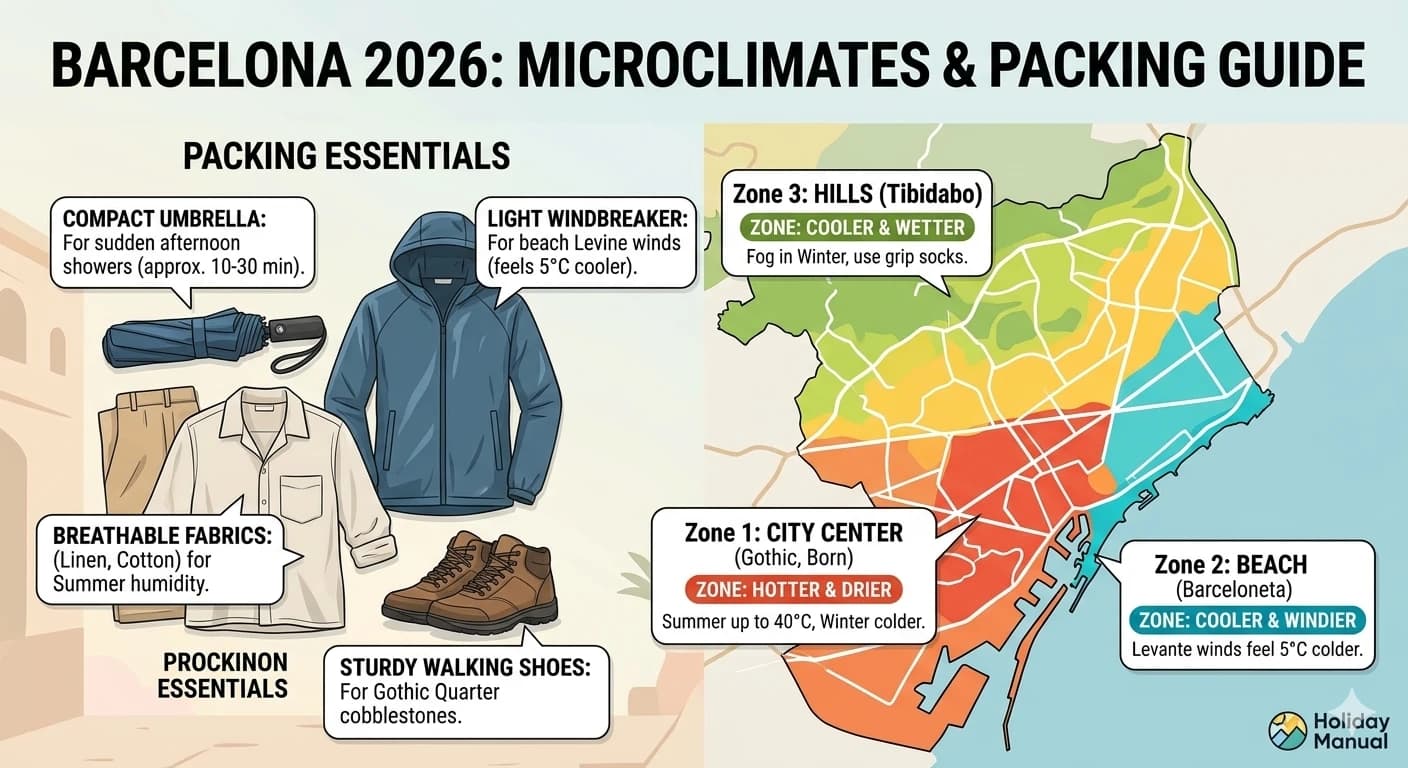
- Centro de la ciudad (Barrio Gótico, El Born):** Más caluroso y seco** debido al concreto y la falta de vegetación. Las temperaturas de verano pueden alcanzar los 40°C a la sombra. El invierno se siente más frío: aquí no hay protección contra el viento.
- Zonas costeras (Barceloneta, Sitges):** Más frescas y ventosas**. La brisa marina mantiene las temperaturas 2–3°C más bajas que en el interior. Los vientos de levante (del este) pueden soplar a 50 km/h.
- Colinas y montañas (Tibidabo, Collserola):** Más frescas y húmedas**. La niebla es común en invierno. Los senderos para caminatas pueden ser resbaladizos; usa calcetines con agarre.
Ejemplo del mundo real: Durante mi viaje en mayo de 2025, hice una caminata de la Barceloneta al Barrio Gótico en 20 minutos. El frente marítimo se sentía a 18°C, pero para cuando llegué a la Plaza Real, estaba a 24°C, una diferencia de 6°C en un demi-kilómetro. Consejo profesional: Consulta los pronósticos para tu vecindario exacto: la mapa de la ciudad de AEMET muestra alertas localizadas.
Errores comunes sobre el clima de Barcelona (y cómo evitarlos)
Incluso los viajeros experimentados caen en estas trampas. He aquí qué no hacer:
Preguntas frecuentes
- ¿Cuál es la mejor época para visitar Barcelona si busco un clima suave?
Lo ideal es ir entre abril y junio o entre septiembre y octubre, cuando las temperaturas rondan los 18–25°C y hay menos aglomeraciones. Julio y agosto alcanzan picos de 30–35°C con alta humedad, mientras que en invierno (noviembre a febrero) la media es de 10–15°C, pero rara vez baja de los cero grados.
- ¿Con qué frecuencia llueve en Barcelona?
La lluvia es impredecible: Barcelona tiene una media de 50–60 días lluviosos al año, pero los chaparrones suelen durar entre 10 y 30 minutos antes de que escampe. Empaca un paraguas compacto (los callejones estrechos del Barrio Gótico no son ideales para los grandes). Octubre a marzo es la época con más precipitaciones.
- ¿Hace viento en Barcelona? ¿Qué debo llevar a la playa?
La playa de la Barceloneta recibe fuertes vientos costeros (especialmente en primavera y otoño), por lo que la sensación térmica puede ser de 5–10°C más fresca que en el interior. Opta por telas ligeras y resistentes al viento y una chaqueta ligera, incluso en verano. ¡Evita las toallas pesadas que saldrán volando!
- ¿Qué tan caluroso es el verano en Barcelona?
Las temperaturas suelen rondar los 30–35°C (julio-agosto), con olas de calor que ocasionalmente superan los 40°C. El efecto de isla de calor urbana de la ciudad hace que se sienta más calor que en las zonas costeras. Mantente hidratado, busca cafeterías con aire acondicionado (como el Café de la Pedrera) y visita los museos temprano para evitar las multitudes y el calor.
- ¿Cuál es la temperatura del mar en Barcelona?
La temperatura del mar oscila entre los 14–16°C en invierno y los 24–26°C en verano. Incluso en julio, el agua se siente más fría que el aire: ¡pruébala antes de echarte un clavado! No se necesitan trajes de neopreno, pero una licra de secado rápido ayuda contra las quemaduras solares y las picaduras de medusa (raras pero posibles en primavera/otoño).
Sobre el autor
Soy piloto militar y escribo sobre viajes cuando no estoy en el aire. Pasar años en una cabina cambia la forma en que miras los sitios — llegas a un lugar nuevo y enseguida empiezas a leerlo: cómo está organizado, a qué ritmo va, qué lo hace funcionar. Esa costumbre acabó dando forma a estas guías.
La visión del autor
Llegar a una ciudad nueva, entender cómo funciona — en el fondo, por eso hago esto.
Perfil del autor y todos los artículos en este idiomaVer todos los autores